ऋग्वेदसंहिता
Rig Veda
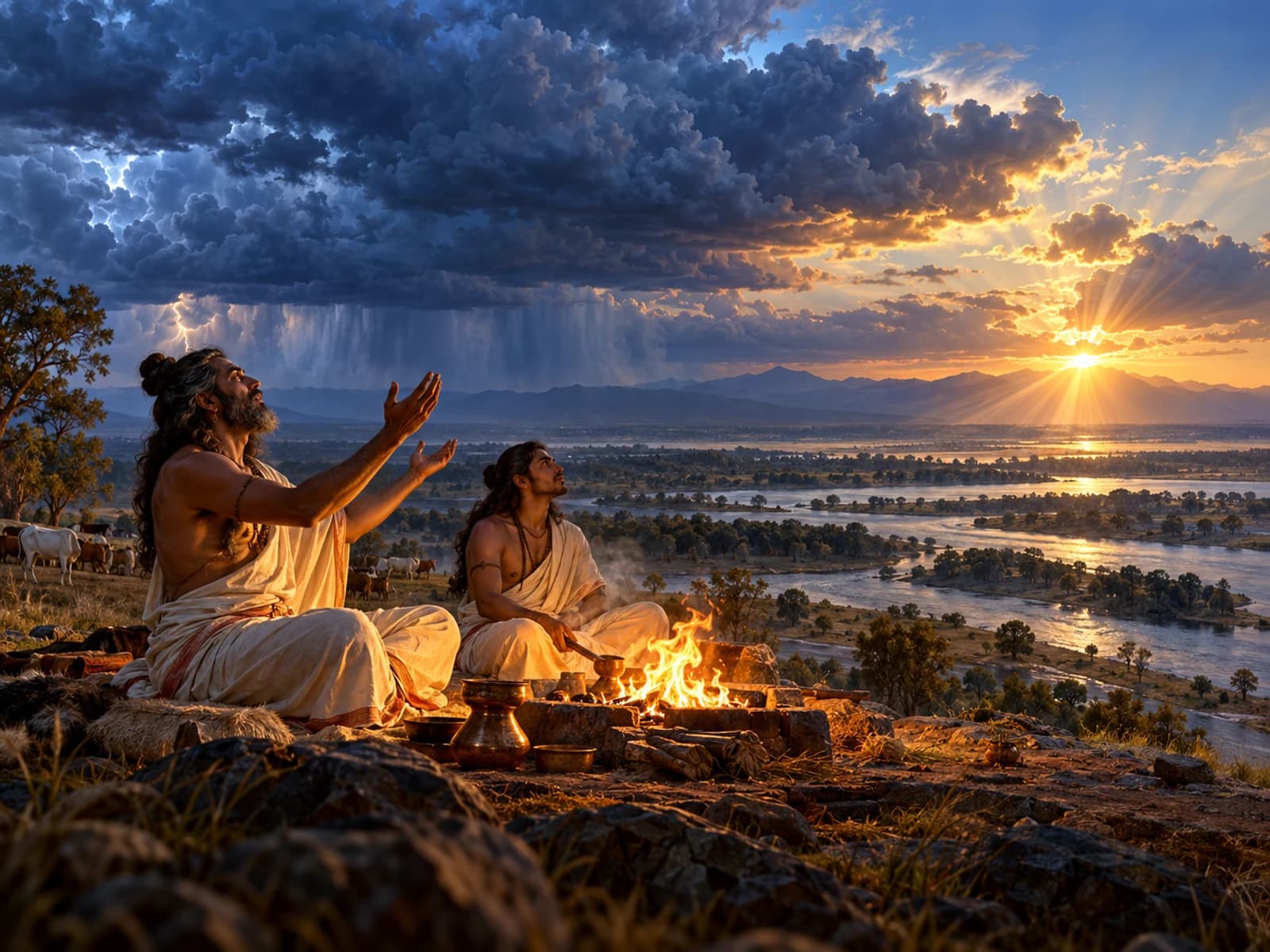
The Rig Veda is the oldest of the Vedas and among the oldest poetry in any Indo-European language: 1,028 hymns in ten books (mandalas), composed over several centuries of the second millennium BCE and handed down by memory with extraordinary exactness. Its poets praise and petition the gods of the sacrifice — Agni the fire, Indra the storm-warrior, Soma the pressed drink, Varuna and Mitra of the cosmic order, the Dawn, the Ashvins, the Maruts — and in the late tenth book ask how the world began. Each entry here is one hymn, in Ralph Griffith's translation.
- 10
- chapters
- 1,028
- verses
- Sanskrit · IAST · English
- in this edition
Contents
10 chapters

Mandala 1 · 191 verses · मण्डलम् १
Hymns of Many Seers
The longest book, a collection of collections from many families of poets. It opens with the hymn to Agni, "I laud Agni, the chosen priest", and includes Dirghatamas's riddle hymn with its line "Truth is one; the sages call it by many names."

Mandala 2 · 43 verses · मण्डलम् २
The Gritsamadas
The family book of the Gritsamadas. Hymns to Agni and Indra — including "He, O men, is Indra", which answers those who ask whether Indra exists — and to Brihaspati, the Maruts and the waters.

Mandala 3 · 62 verses · मण्डलम् ३
Vishvamitra and the Gayatri
The family book of Vishvamitra. It holds the Gayatri mantra (3.62.10), "May we attain the excellent glory of Savitar the god", and the dialogue of Vishvamitra with the rivers he must cross.

Mandala 4 · 58 verses · मण्डलम् ४
Vamadeva
The family book of the Vamadevas. Hymns to Agni, to the Ribhus who fashioned the gods' chariot and cup, to Indra, and Vamadeva's own memory of being born.

Mandala 5 · 87 verses · मण्डलम् ५
The Atris
The family book of the Atris. Many hymns to Agni and the Maruts, the storm-gods who ride with the rain, and the story of the sun hidden by the demon Svarbhanu.

Mandala 6 · 75 verses · मण्डलम् ६
The Bharadvajas
The family book of the Bharadvajas. Hymns to Agni, Indra and Pushan the guardian of roads and herds, and a battle hymn to the weapons of war.

Mandala 7 · 104 verses · मण्डलम् ७
Vasishtha
The family book of Vasishtha, whose hymns to Varuna are the most personal in the Veda. It tells of the Battle of the Ten Kings and ends with the famous hymn of the frogs.

Mandala 8 · 103 verses · मण्डलम् ८
The Kanvas and the Valakhilya
Hymns of the Kanvas and Angirases, many in strophic form, with the eleven supplementary Valakhilya hymns (8.49–8.59) and dialogues with Indra.

Mandala 9 · 114 verses · मण्डलम् ९
Soma Pavamana
Every hymn is to Soma Pavamana, the drink of the gods being purified as it flows through the sieve — the most single-minded book of the Veda.

Mandala 10 · 191 verses · मण्डलम् १०
Creation and the Late Hymns
The latest book, and the most varied. It contains the hymns of creation — "Then there was neither being nor non-being" — and of the cosmic Person (Purusha), Yama and the dead, Surya's wedding, the gambler's lament, Vac the goddess of speech, and the dialogue of Pururavas and Urvashi.